01
HISTORISCHER KONTEXT
Persian Wars and Greek city-states
Greek poleis were independent and politically varied. Films often exaggerate a unified Greek identity and simplify Persian opponents.
Discover the cultures and political conflicts of ancient Greece, from mythology and Bronze Age legend to the Persian Wars, classical Athens and Macedonian expansion. The library contains few sources for everyday life or Greek democracy: mythical adaptations are clearly labelled as myths, and graphic action films are not treated as reliable history.
A selective starting itinerary through the major transformations, with explicit evidence warnings and a manageable number of key works.
Greek poleis were independent and politically varied. Films often exaggerate a unified Greek identity and simplify Persian opponents.
490 p.n.e.
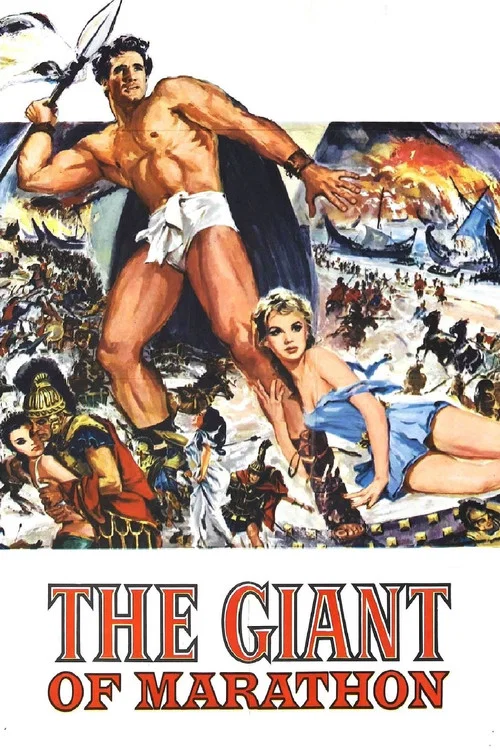
DARGESTELLTE GESCHICHTE 490 p.n.e.
Dramatizes the 490 BCE Battle of Marathon and the struggle with Achaemenid Persia.
Older adventure spectacle: tactics, personalities and national framing are highly simplified.
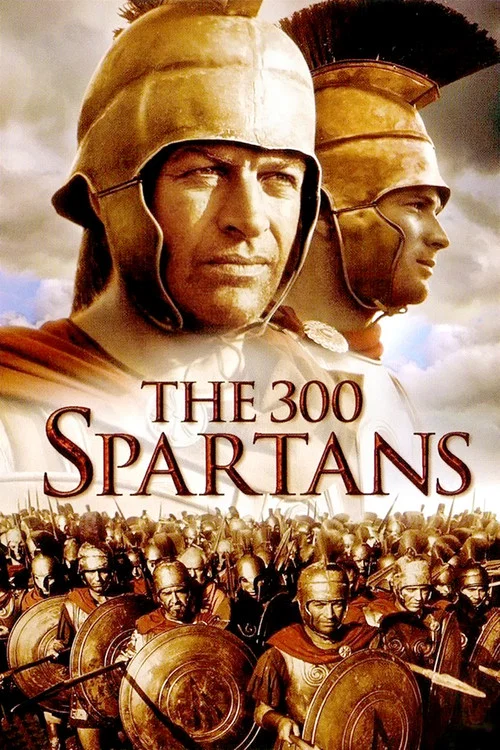
DARGESTELLTE GESCHICHTE 480 p.n.e.
Illustrates the Thermopylae campaign and Spartan military values.
Heroic reduction of the battle; other Greek allies and Persian perspectives are marginalized.
The surviving film library is thin on democratic institutions, women’s lives, slavery and the Peloponnesian War.
404 p.n.e. → 399 p.n.e.
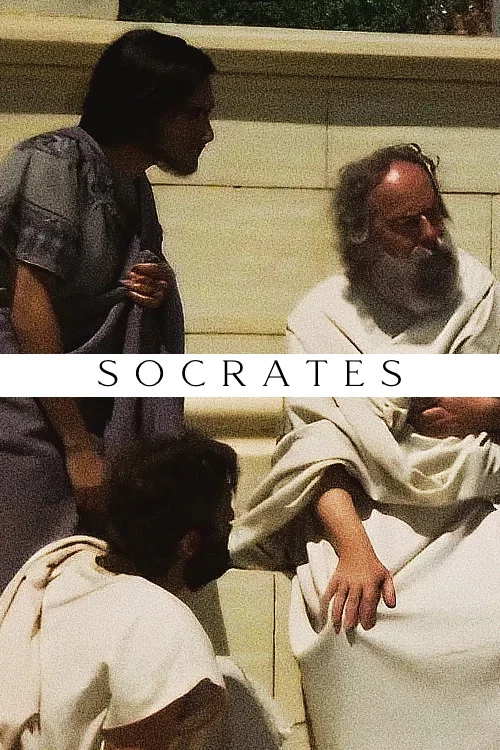
DARGESTELLTE GESCHICHTE 404 p.n.e. → 399 p.n.e.
Approaches the final years and trial of Socrates and the civic conflicts of classical Athens.
A philosophical reconstruction using surviving texts, not recorded dialogue.
Macedonian conquest made Greek language and institutions influential far beyond the Aegean, alongside coercion and cultural interaction.
336 p.n.e. → 323 p.n.e.
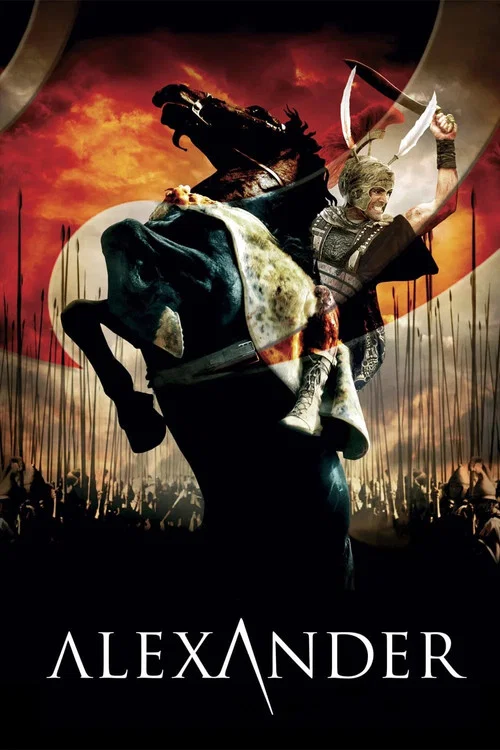
DARGESTELLTE GESCHICHTE 336 p.n.e. → 323 p.n.e.
Adds a large-scale portrayal of Alexander’s campaigns and court politics.
Dramatized personalities and a contested modern interpretation of ancient sources.